Creative Testing
Part of Paid social campaign strategy for Australian advertisers
When paid social is unlikely to solve a weak offer
Spot offer problems that more paid social spend cannot fix, then check claims, eligibility, fulfilment and commercial value.
Paid social is unlikely to fix an offer whose price, terms, availability or value gives eligible customers a reason to decline. More delivery can expose that problem to more people. Before increasing spend after weak sales, check both the campaign journey and the offer.
Paid Social vs. Offer Quality: When More Spend Doesn't Help
- Paid Social Spend Increase
- May amplify weak offer flaws
- Strong Offer with Clear Value
- More reach can drive better conversion
Check the journey before diagnosing the offer
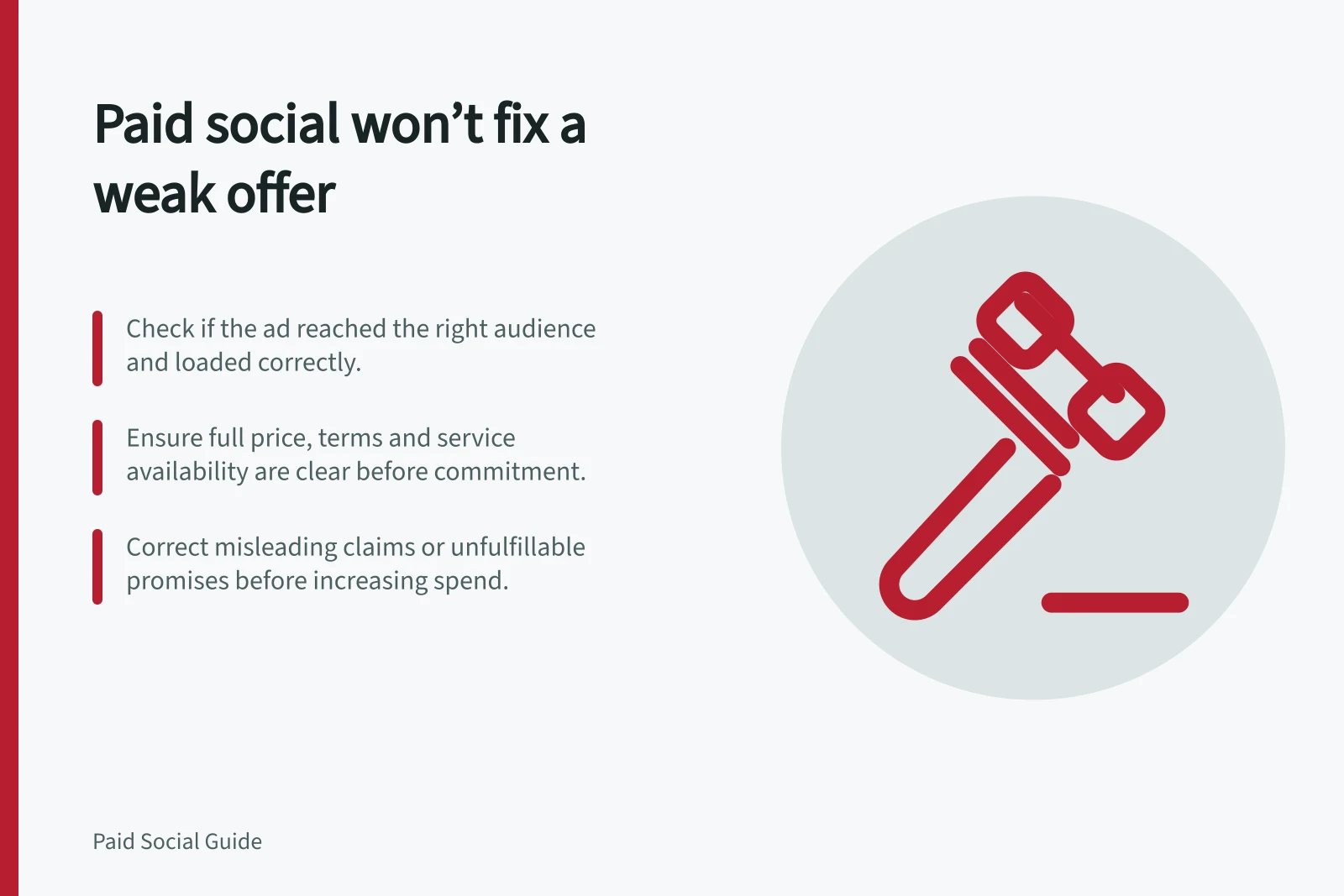
A quiet campaign does not prove the offer is weak. Check whether the ad reached the intended people, the destination loaded and the intended action was recorded. If those checks are sound, examine what customers are being asked to accept.
Can the advertised item be supplied? Is the full cost clear before commitment? Does the page explain what is included, where a service is available and what happens next? Does the evidence shown support the claim?
A material delivery restriction should not first appear late in checkout.
The ACCC accepts reports about possible misleading or false claims. It can require businesses to back up claims and may investigate or take compliance or enforcement action if a business misleads. Correct a misleading or unfulfilable promise before buying more exposure.
Find where interest stops
Pattern to investigate / Offer question
- Relevant visits, few enquiries
- Are the benefit and next step clear?
- Enquiries outside eligibility rules
- Were service area and essential conditions visible?
- Checkout starts, few confirmed orders
- Did price, delivery, stock or payment terms become clear late?
- Orders with poor contribution
- Is the offer viable after acquisition and service costs?
These patterns suggest questions, not causes. Tracking gaps, page faults, seasonal demand and an unsuitable audience can look similar. Review actual enquiries, checkout records and customer questions before changing the proposition.
Repair the promise
State unclear prices or inclusions plainly in the ad and destination. Show service-area limits before the enquiry form. If stock or capacity is uncertain, correct the promise or pause promotion until the business can fulfil it. Use specifications, terms or demonstrations that the business can support rather than stronger claims written only to win clicks.
For example, a regional service advertiser might promise a same-week appointment when its booking page offers that timing in only one suburb. Better geographic targeting could reduce irrelevant enquiries, but the broad promise would still need correction. State the actual service area and appointment conditions, then assess demand for that offer.
If orders arrive but contribute too little, calculate what the business retains after its relevant costs. Platform-reported revenue alone cannot show whether the orders are worthwhile.
Once the promise, eligibility and next step are clear and fulfilable, assess the revised offer against a defined business outcome and an affordable spend limit. If it remains hard to explain, fulfil or support economically, pause paid social for that proposition while the product, service or terms change.
Pros and Cons of Relying on Paid Social to Fix a Weak Offer
- ProsCan increase visibility for a valid offer; helps test market demand
- ConsExposes flaws in pricing, availability or fulfilment; may lead to complaints or ATO scrutiny if misleading