Conversion Tracking
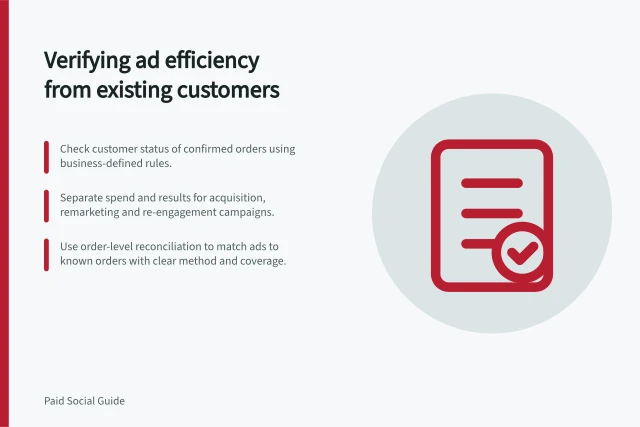
Checking whether reported efficiency comes from existing customers
Check first and repeat orders beside paid social results, while keeping customer mix separate from unverified ad attribution.

Section
Conversion Tracking
Check first and repeat orders beside paid social results, while keeping customer mix separate from unverified ad attribution.
Conversion Tracking
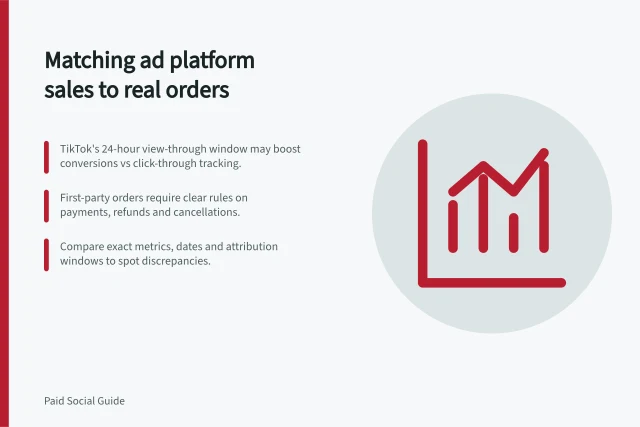
Reconcile attributed purchases with confirmed orders by defining each population and checking event, date, value and order-status rules.
Conversion Tracking
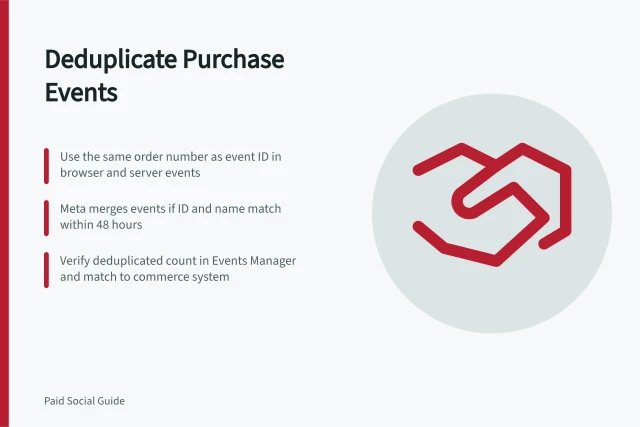
Deduplication solves a specific problem: the same purchase reaches an ad platform from both browser and server and must count once.
Conversion Tracking
Define a qualified enquiry, calculate its cost and avoid comparisons distorted by incomplete review or changing rules.
Conversion Tracking
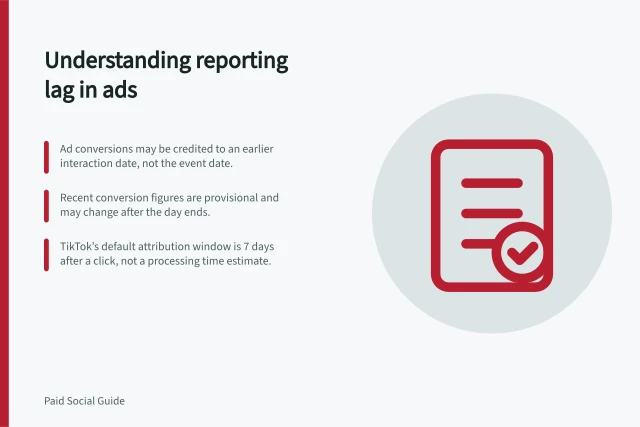
Explain why recent paid social conversions can change, how ad dates differ from order dates and when figures remain provisional.
Conversion Tracking
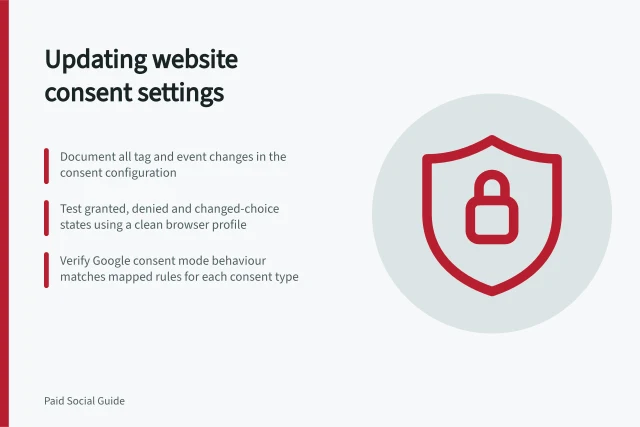
A consent-banner change can alter conversion data even when the campaign and website sales are stable.
Conversion Tracking
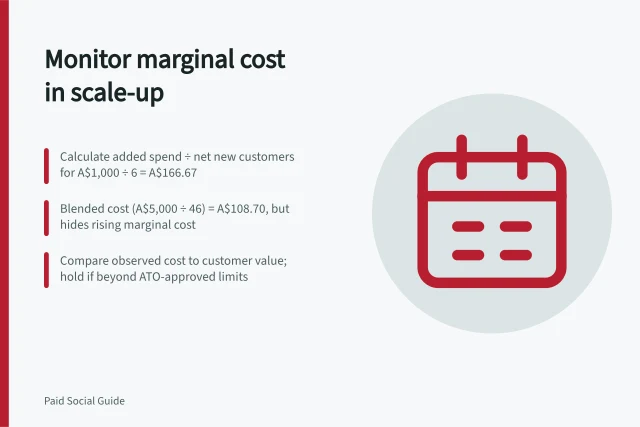
Calculate the observed cost of net additional customers during a paid social scale-up and interpret it beside confirmed outcomes and customer value.
Conversion Tracking
Compare ad delivery, useful actions and confirmed business outcomes while keeping attribution and order definitions clear.
Conversion Tracking
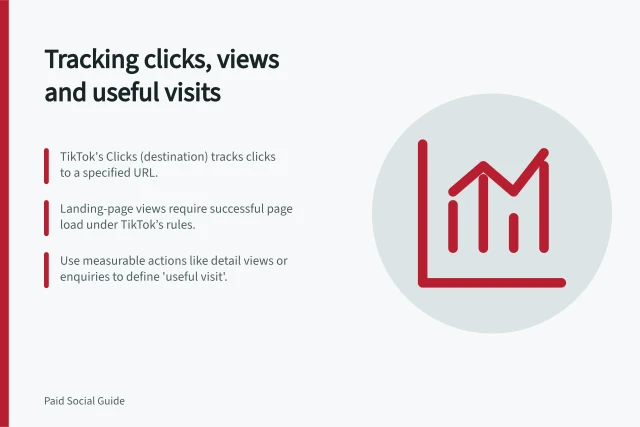
See what each paid social traffic measure establishes and where to investigate a gap between ad interaction, page load and useful action.
Conversion Tracking
Social conversion tracking should describe a real business event once, with the right value and the right permission state.
Conversion Tracking
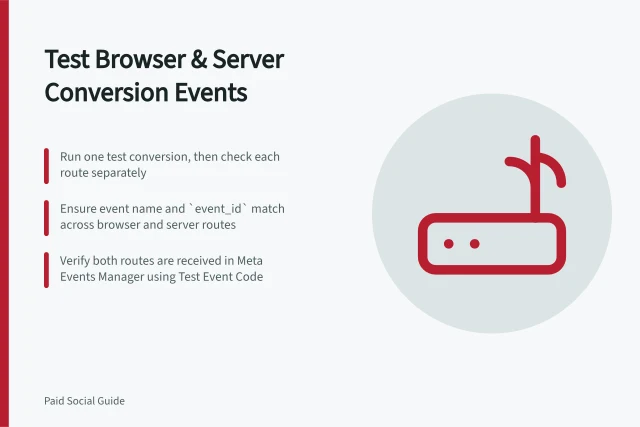
When the browser pixel and server integration report the same conversion, test them as a pair.
Conversion Tracking
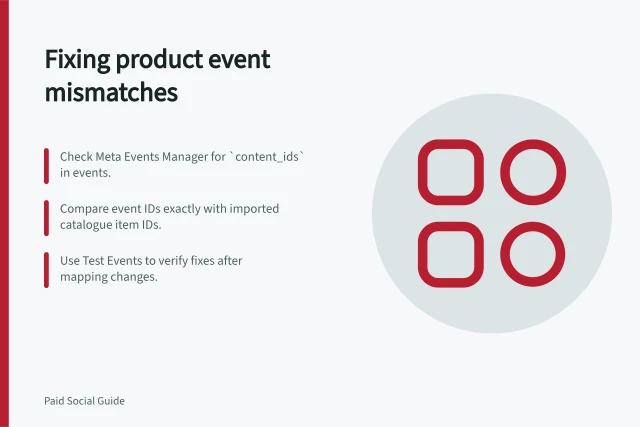
Trace product IDs from site events to catalogue items, separate missing IDs from unmatched IDs and confirm the repair.