Account Structure
Part of Social lead generation ads
Routing social ad leads while they are still relevant
Set a clear route from social lead form to an owner, verify delivery and keep unassigned enquiries visible.
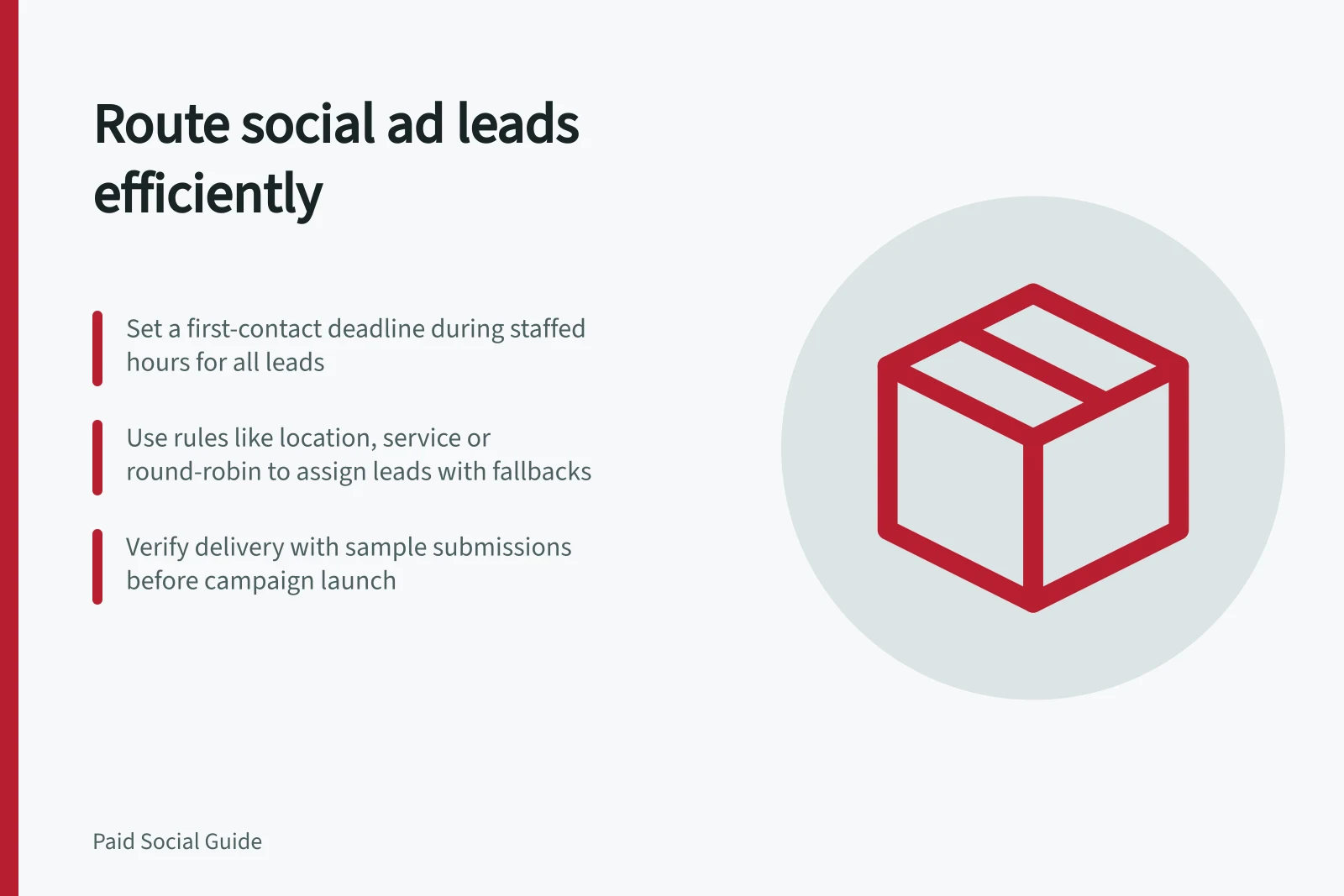
Before a social lead ad runs, decide where each enquiry goes, who owns it and what happens if that person is unavailable. A submission is useful only when its details reach a team member who can act on them. Set a first-contact deadline the team can meet during staffed hours, and define what happens when it is missed.
Map the route
Document the path from form submission to delivery, working record, assignment, first attempted contact and outcome. Preserve campaign and form identifiers when the delivery method provides them. Decide how repeat submissions appear and who handles an enquiry that matches no assignment rule.
For Meta/Facebook Instant Forms, Meta lead records can be exported from Ads Manager as CSV or XLS; use a staffed checking schedule for this manual route. One named automated option is RudderStack’s native Facebook Lead Ads source, which connects by OAuth and sends standard identify events to destinations.
RudderStack describes a webhook receiving a lead_id, then retrieving the full lead through Facebook’s API; the webhook must be acknowledged within five seconds. That is a technical acknowledgement, not a human response target, so set a separate first-contact deadline.
LinkedIn allows Lead Gen Form submissions to be downloaded from Campaign Manager or delivered through an integration. TikTok provides a route for accessing Instant Form lead data.
If using middleware, named options include LeadsBridge and Zapier. Test the full delivery path and compare received records with a platform export so missed or incomplete delivery can be found.
Confirm current retention and access arrangements in the relevant platform documentation before relying on a download route. Assign someone to check the applicable settings before launch.
Assign and provide a fallback
Use rules a team can explain, such as service, location, an existing customer relationship, territory or round-robin assignment. Record the owner and next action; send uncertain enquiries to a visible review queue.
Name a backup for each owner. If the primary owner is unavailable, alert the backup and route the enquiry to an attended queue; do not silently discard records that match no rule.
Check delivery before launch
For each form variation, use a permitted sample submission to verify the contact fields, answers, source, form identity and assigned owner in the working system. Compare the received record with the submitted details so missing fields or assignment errors are caught before launch.
Confirm the notification reaches an attended place, and that the confirmation shown to the enquirer matches the follow-up the team can provide. Recheck delivery after changing a form, integration permission or destination field, and confirm the owner and notification still work.
Keep the queue accountable
Statuses such as new, attempted, contacted, qualified and closed help distinguish delivery from outcome. Record why an enquiry is unsuitable. An unanswered call is a follow-up result; it does not by itself show that the original request was outside the business’s eligibility rules.
Check unassigned records and queue age at each staffed handover while the campaign is active. Set a first-contact deadline before launch; when it is missed, alert the backup, record the escalation and assign the next action.
For Australian enquiries, review access to personal details and collection notices against OAIC guidance on APP 5. An APP entity must take reasonable steps to notify people of collection matters at or before collection, or as soon as practicable afterwards if that is not practicable; those matters include identity and contact details, purposes, usual disclosures and APP Privacy Policy information.
Assess any later marketing email or SMS separately from the requested quote or callback. Check the relevant ACMA guidance on spam.
Key Compliance & Performance Metrics for Australian Lead Handling
- APP 5 Notification RequirementNotify at or before collection, or as soon as practicable if not possible
- First-Contact DeadlineSet and meet during staffed business hours
- Spam Compliance (ACMA)Marketing messages must comply with spam laws; separate from initial request
- Webhook Acknowledgement TimeMust be within 5 seconds (technical only)